Drains
Drains Far From the Edge
Wide single-ply roofs drain to interior bowls spaced far apart. One clogged bowl floods a large area during heavy rain.

Whitestown commercial roof repair from us covers single-ply and metal warehouse roofs, with roof access planned around docks and truck traffic.
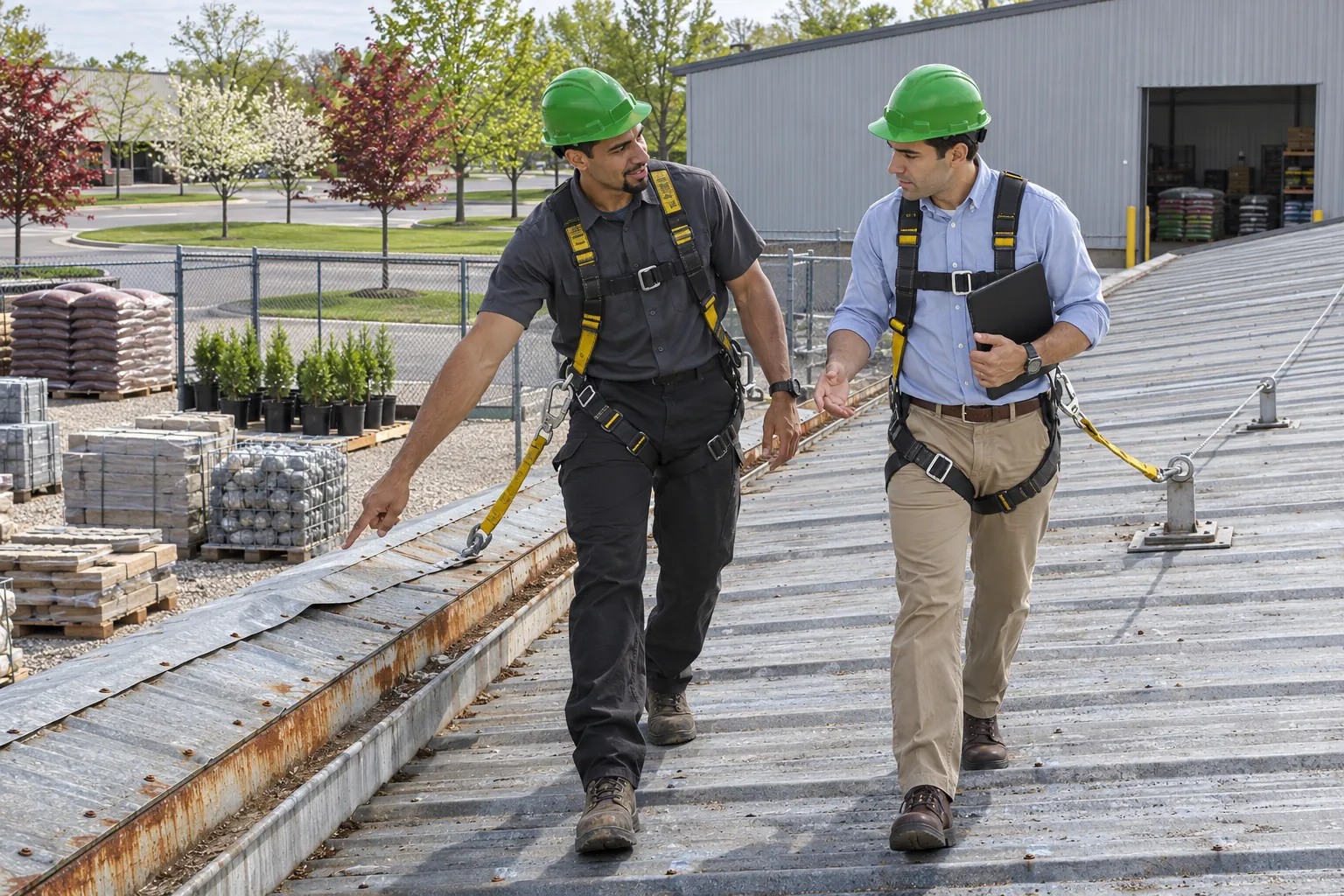
Whitestown commercial roof repair on distribution buildings starts at ground level, where trailers, docks, and truck lanes decide where a lift can go.
A warehouse with dozens of dock doors leaves little room for ladders and material. We pick an access point away from active doors, stage material where trucks never turn, and time any lift work for slow hours. Then the repair itself can run without blocking a single trailer.
Inside, we match each wet spot to its column line so the roof walk goes straight to the right bays. That saves hours on a roof the size of several football fields and keeps the lift time short.
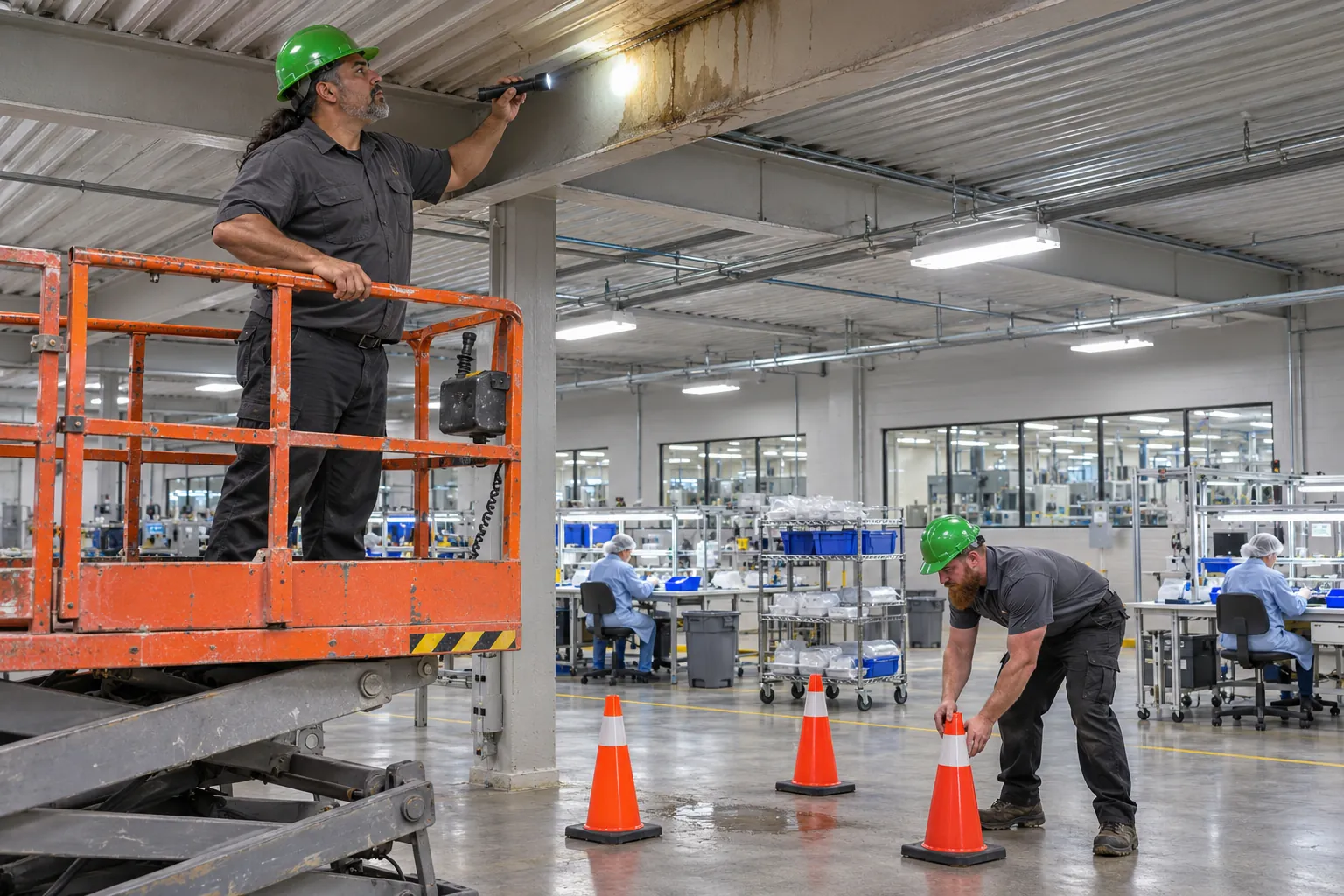
Distribution roofs cover big areas, so small defects repeat across the whole roof.
Wide single-ply roofs drain to interior bowls spaced far apart. One clogged bowl floods a large area during heavy rain.
Exhaust fans and units sit above storage aisles. A failed curb drips straight onto pallets and racking.
Daylight panels and smoke hatch curbs dot most warehouse roofs. Their frames and gaskets leak as they age.
Single-ply roofs on large buildings carry miles of seams. Weak welds along those runs open after cold snaps.
Service techs cross long distances to reach units on big roofs. Their usual route scuffs the membrane and opens small punctures.
A repair that never blocks a dock helps everyone moving freight.
The repairs Whitestown warehouses need most often.
Drains, curbs, and skylights over storage areas are repaired first, since a leak there damages stock right away.
Weak welds are cut back and rewelded, and punctures along service paths get patched with matching membrane.
On metal warehouse roofs, failed lap sealant is removed and replaced, and stitch screws are tightened or swapped.
Walkway pads along the paths technicians use keep foot traffic off the field membrane and stop new punctures.
Send the address and the aisle or column line, and we will plan roof access that leaves every dock door open.
Get A Free EstimateFour stages, built around keeping freight moving.
Our inspection matches each leak inside to its column line, then walks those bays on the roof, checking drains, curbs, skylights, and seams.
With the shipping lead, we pick a roof ladder or lift spot, a staging area, and the hours that keep trucks and trailers moving.
Repairs start with whatever sits over stored goods, then move to seams and service paths elsewhere on the roof.
Every roof repair goes into the report with its column line and a dated photo, so the next inspection starts from a clear record.
Whitestown is one of five towns we cover from Carmel. Somewhere else? Call us or send us a message.
| Town | County | What We See On Roofs There |
|---|---|---|
| CarmelHome Base | Hamilton County | Office parks, medical offices, and retail centers with membrane roofs, parapets, and rooftop units. |
| Westfield | Hamilton County | Flat roofs on retail and office buildings, and metal warehouse roofs checked after hail. |
| Zionsville | Boone County | Parapets, internal drains, and rooftop units on office, retail, and light industrial roofs. |
| Lebanon | Boone County | Metal panel and large flat roofs on industrial and warehouse buildings. |
| Edinburgh | Johnson County (parts in Bartholomew and Shelby) | Retail, shop, and warehouse roofs repaired around store hours. |
Warehouse roofs, metal seams, and dock access.
Large single-ply and metal roofs on Whitestown distribution buildings are a core part of our work. Leaks there tend to start at drains, curbs, and skylights, and we plan roof access around loading docks and truck traffic before tracing and repairing them.
Seam repair starts with scraping out failed sealant and cleaning the lap. Stitch screws are tightened or replaced, new sealant goes in, and reinforcing fabric with a compatible sealer covers seams that have moved. Lifted standing seams get their clips and seams reset.
Roof access goes on a side or corner away from active doors, and material stays clear of truck lanes. Any lift work gets timed for slow shipping hours, so doors stay open. Ladders go up only where no trailer will back in.
Their curbs and gaskets age like any other roof opening. We reseal or reflash the curb and check that the hatch still closes tight, while the vent mechanism itself stays with its service company.
Leaks inside are matched to column lines first, so the roof walk focuses on the right bays. Drains, curbs, skylights, and seam runs in those bays get checked closely before the rest of the roof. A drain list and a seam map from that visit guide the repairs that follow.
Pads along the routes to units and hatches take the wear that would otherwise scuff the membrane. They cost little next to the punctures they prevent on a busy roof.
Send the address and the column line where water lands, and we will plan access that keeps your docks open.