Fasteners
Fastener Rows on Long Panel Runs
Long metal panels expand and contract more than short ones. The screws at the ends of those runs loosen first and leak along the purlins.

Lebanon commercial roof repair from us covers metal panel and large flat roofs on plants and warehouses, planned so operations keep running.
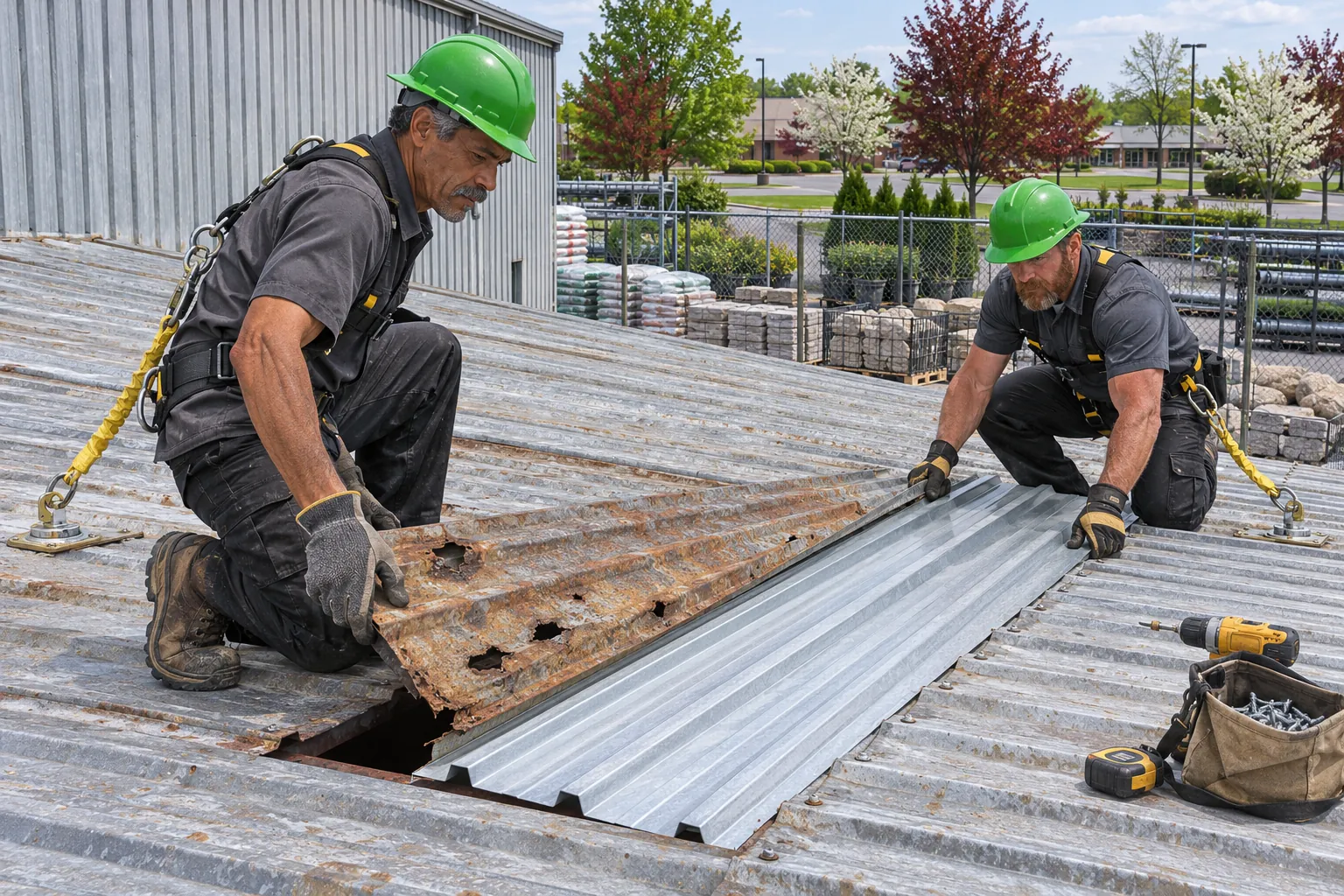
Lebanon commercial roof repair usually happens over a working floor, so the repair plan starts with what is happening below the roof.
Forklifts, racking, and production lines sit under most of the roofs we repair here. We agree on work zones, staging spots, and any areas to rope off with the facility contact first. Repairs then move bay by bay so only a small part of the floor is ever under active roof work.
Skylights over racking and curbs added for new equipment get special attention, since both sit above product. Each finished zone gets checked from the floor before the next one opens.
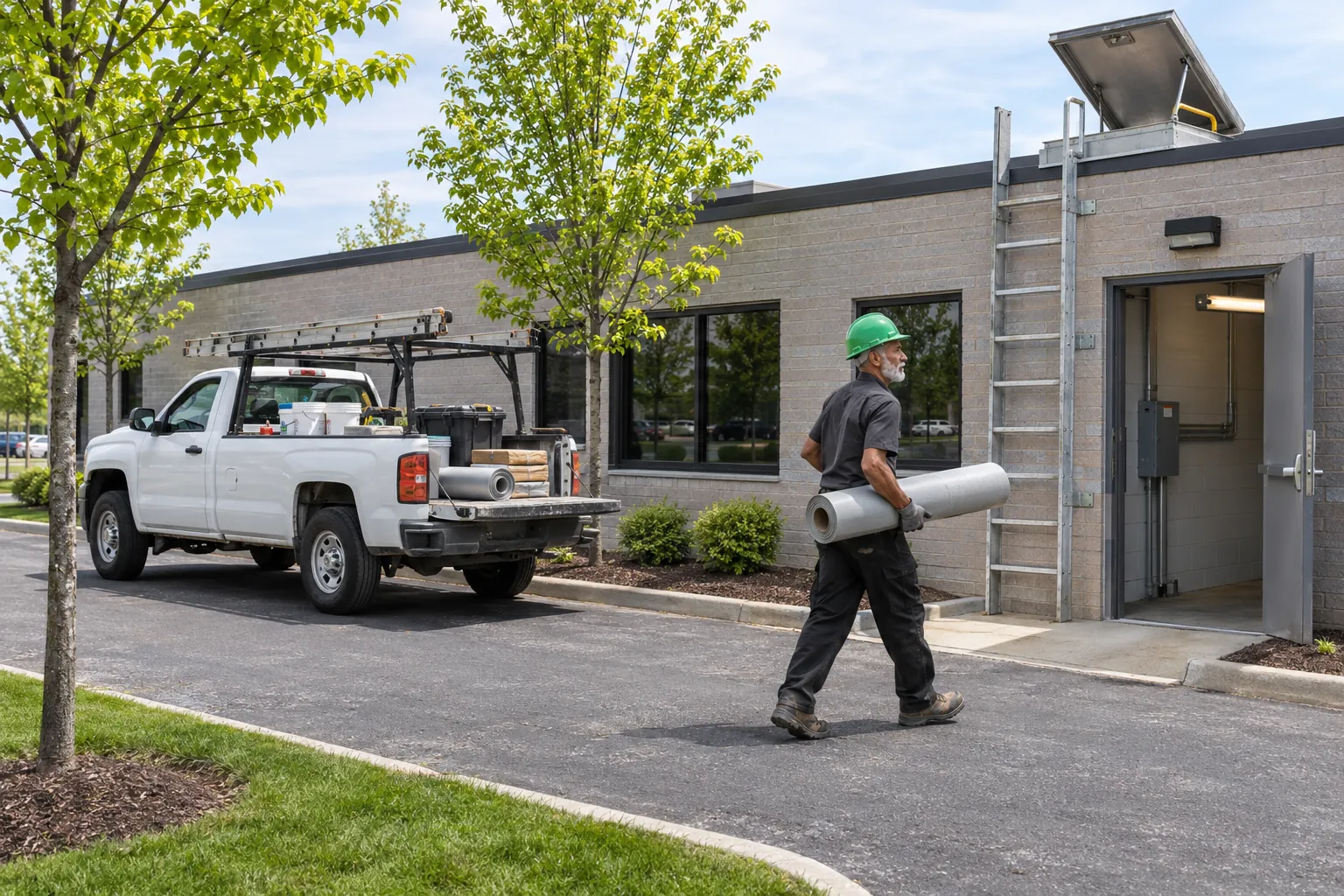
Large industrial roofs fail at the details repeated hundreds of times across them.
Long metal panels expand and contract more than short ones. The screws at the ends of those runs loosen first and leak along the purlins.
Translucent panels set into metal roofs crack around their screws. Leaks land on racking right under the daylight.
Big flat sections rely on a few drains, so one blocked strainer floods a large area. Water rises over laps that normally stay dry.
New fans and vents get added as operations change. Each one adds a curb, and rushed flashing on those curbs is a common leak point.
Slow leaks on wide flat sections soak the insulation long before a drip shows. Soft spots underfoot are the first clue on the roof.
Repairs that respect the floor below protect production as much as the roof.
The repairs Lebanon plants and warehouses ask for most.
Fastener rows are replaced with oversized screws and new washers, laps are resealed, and rusted panels are swapped one bay at a time.
Cracked translucent panels are replaced in the same rib profile, with sealed laps and washers sized for plastic.
Curbs added for new equipment get proper flashing, and membrane around fans and vents is repaired with pads for service traffic.
Soaked board found by cores and meter readings is cut out and replaced before new membrane goes over it.
Send the address and the aisle or line where water lands. We will plan a repair that keeps the rest of the floor running.
Get A Free EstimateFour stages that keep the roof work and the floor work apart.
Our visit starts on the floor with the facility contact, marking leaks by column line, then moves up to the matching bays on the roof.
Each roof repair zone gets a date, a staging spot, and any floor area to rope off. Those details go into the written scope.
Screws, laps, skylights, and curbs in the zone are repaired before the next zone opens, so only one area is ever affected.
Finished zones get a water check and dated photos, and the facility contact confirms the floor area is clear.
Lebanon is one of five towns we serve from Carmel. Not on the list? Call us or send us a message.
| Town | County | What We See On Roofs There |
|---|---|---|
| CarmelHome Base | Hamilton County | Office parks, medical offices, and retail centers with membrane roofs, parapets, and rooftop units. |
| Westfield | Hamilton County | Flat roofs on retail and office buildings, and metal warehouse roofs checked after hail. |
| Zionsville | Boone County | Parapets, internal drains, and rooftop units on office, retail, and light industrial roofs. |
| Whitestown | Boone County | Single-ply and metal roofs on distribution buildings with busy loading docks. |
| Edinburgh | Johnson County (parts in Bartholomew and Shelby) | Retail, shop, and warehouse roofs repaired around store hours. |
Plants, warehouses, storms, and working floors.
Metal panel roofs and wide flat roofs on Lebanon plants and warehouses are a regular part of our work. Fastener rows, seams, skylight and curb flashing, and drains are the usual repairs, set up with facility staff so operations continue.
After a storm, we check for torn membrane, lifted edges, loose panels, and damaged flashing, and make temporary repairs where water is coming in. The permanent repair follows once the damage is documented with photos and a written scope.
Most repairs happen above running operations. Only the zone under active work gets marked off, and work near exhaust or process equipment is planned with your safety contact.
Translucent panels turn brittle in sunlight and crack around their screws, and their laps lose sealant faster than steel laps. Replacing the cracked panel and resealing the laps stops the leak.
Each new fan or vent needs a curb tied into the roof with flashing matched to the roof system. Rushed curb work is a common leak source, so we inspect added curbs on every visit.
Meter readings across a grid point to wet areas, and a small core cut confirms what the board looks like. Wet board gets replaced before any new membrane goes over it.
Send the address and where water lands on the floor, and we will plan the repair around your operations.