A Membrane Repair Holds When
- One seam, puncture, or blister is leaking
- Insulation reads dry a few feet from the damage
- The membrane stays pliable when lifted
- Ponding traces to one blocked or sunken drain
- Flashing failed at a single wall or curb

Carmel flat roof repair from us covers welded and taped seams, punctures, blisters, and the drains that leave water standing on low-slope roofs.
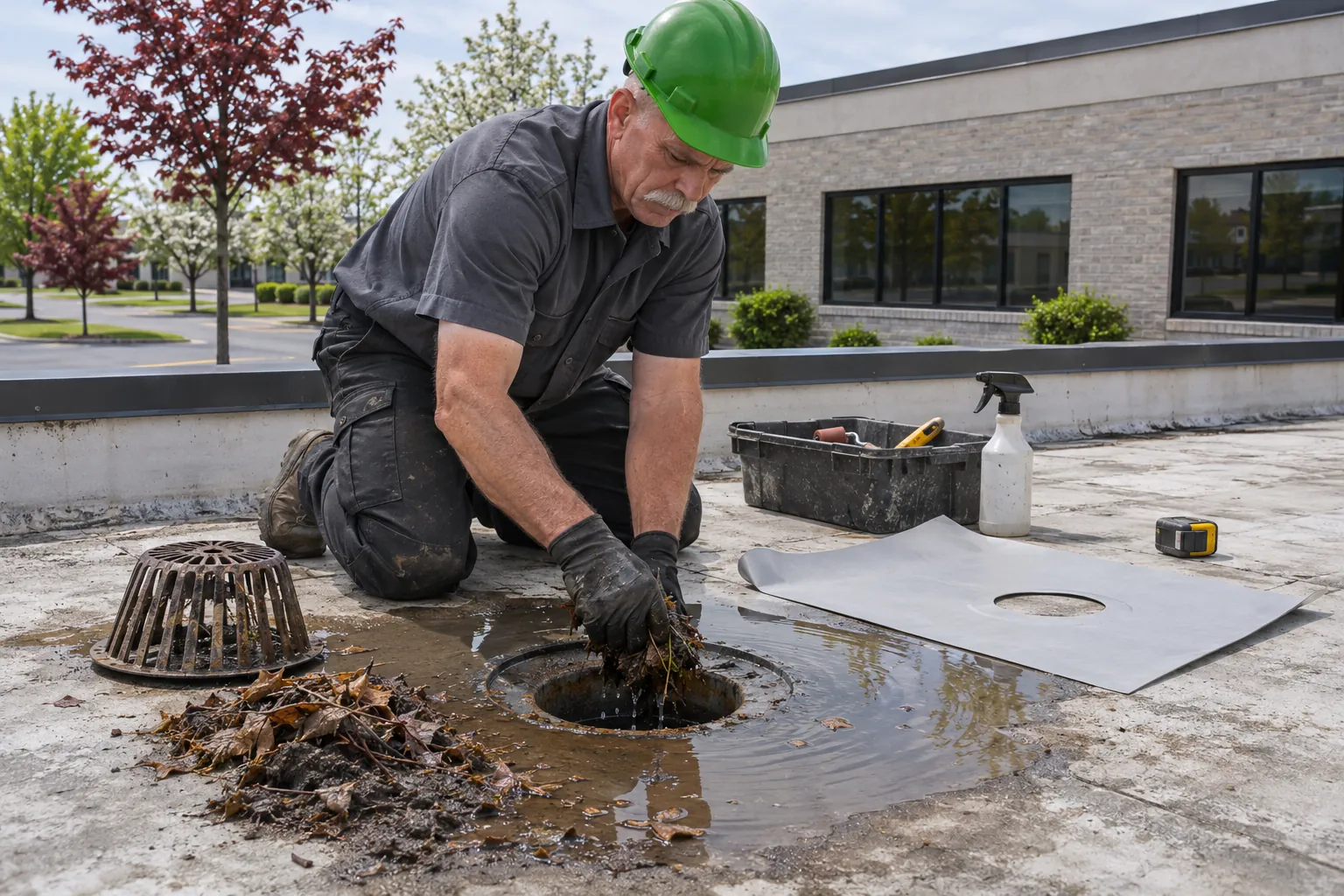
Carmel flat roof repair works best while the damage stays local. These two lists show when a membrane repair holds and when the roof needs a bigger plan.
Low-slope roofs over offices, clinics, and stores fail in a few familiar places.
Cold snaps shrink TPO and EPDM, and a weak weld or aged tape opens along the lap edge. Water slips sideways under the sheet before it finds the deck.
Compressed insulation and clogged strainers leave rings of dirt where water sat for days. Those low spots age the membrane faster than the field around them.
Dropped tools and service visits to rooftop units leave small holes in single-ply sheets. They often sit along the path from the hatch to the equipment.
Trapped moisture expands in summer heat and lifts the top ply. Opened blisters let water reach the base sheet and the board under it.
A fixed seam or drain pays off for everyone in the building, not only the owner on paper.
Each membrane family gets its own repair method, and the drain gets fixed along with the roof around it.
Cleaned and prepped TPO accepts a new patch welded with a hand welder, then probed along every edge. The weld fuses the sheets so the lap acts as one piece.
Rubber roofs get primer, seam tape, and a pressed cover strip over the cleaned lap. Old adhesive residue comes off first so the tape bonds to the membrane itself.
Cracked bowls, broken clamping rings, and torn drain flashing get replaced, and the membrane is reflashed into the drain at the low point.
Saturated board comes out and tapered insulation or a cricket goes in where water sits against curbs and walls. The new slope moves water to the drain.
Ponding that lasts more than a couple of days usually means a blocked strainer or crushed insulation. Send the address and we will check the drains first.
Get A Free EstimateFour stages, each one tied to the membrane on your roof.
Our inspection notes the membrane type, its thickness, and how it is attached, since TPO, EPDM, and modified bitumen each need different repair materials. Every lap within reach of the leak gets probed.
A small core sample shows the insulation, the cover board, and any trapped water. Readings on a grid around it tell us how big the patch area needs to be.
Wet board is cut out and replaced, then new membrane is welded or taped over it with laps that extend past the old opening. Drains and curbs nearby are reflashed in the same visit.
Finished seams get a probe test along every edge. Strainers are cleaned and reset, so the next rain drains instead of pooling against the new work.
Flat roofs share buildings with metal canopies, plant equipment, and leaks that need tracing.
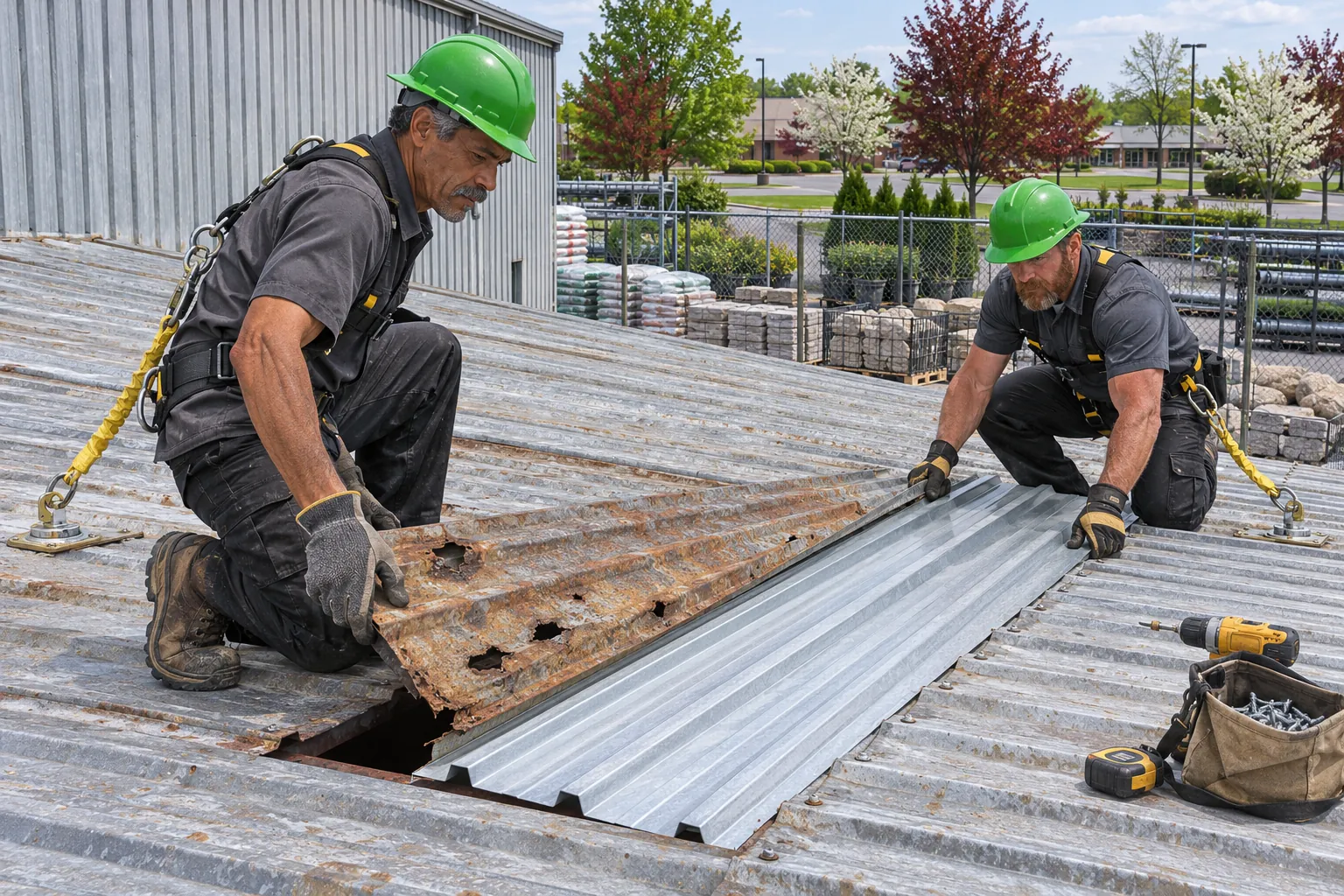 Through-Fastened Panels
Screws, laps, trim, and rusted panels on metal buildings.
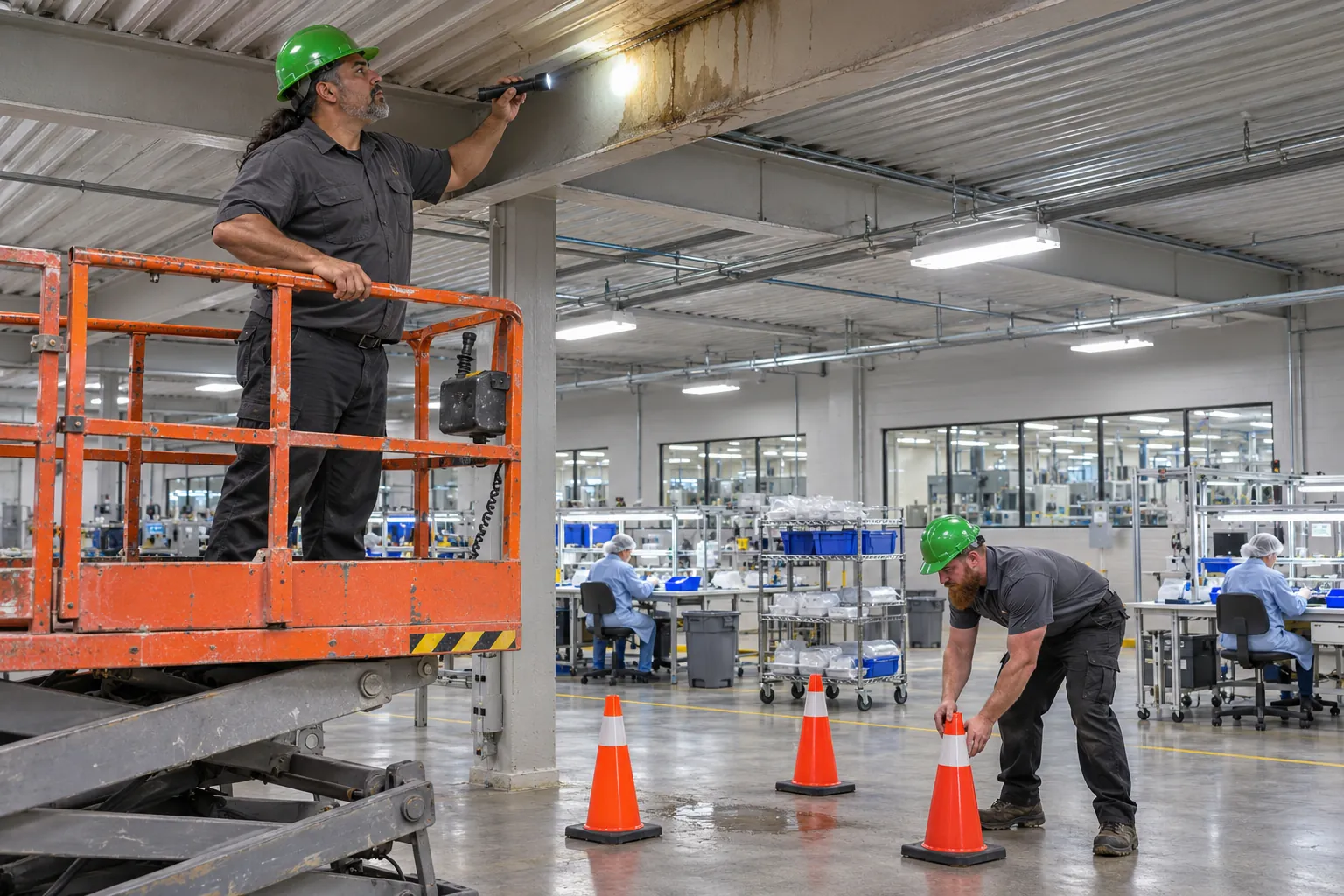 Traced To The Opening
Tracing active drips and stains back to the roof opening.
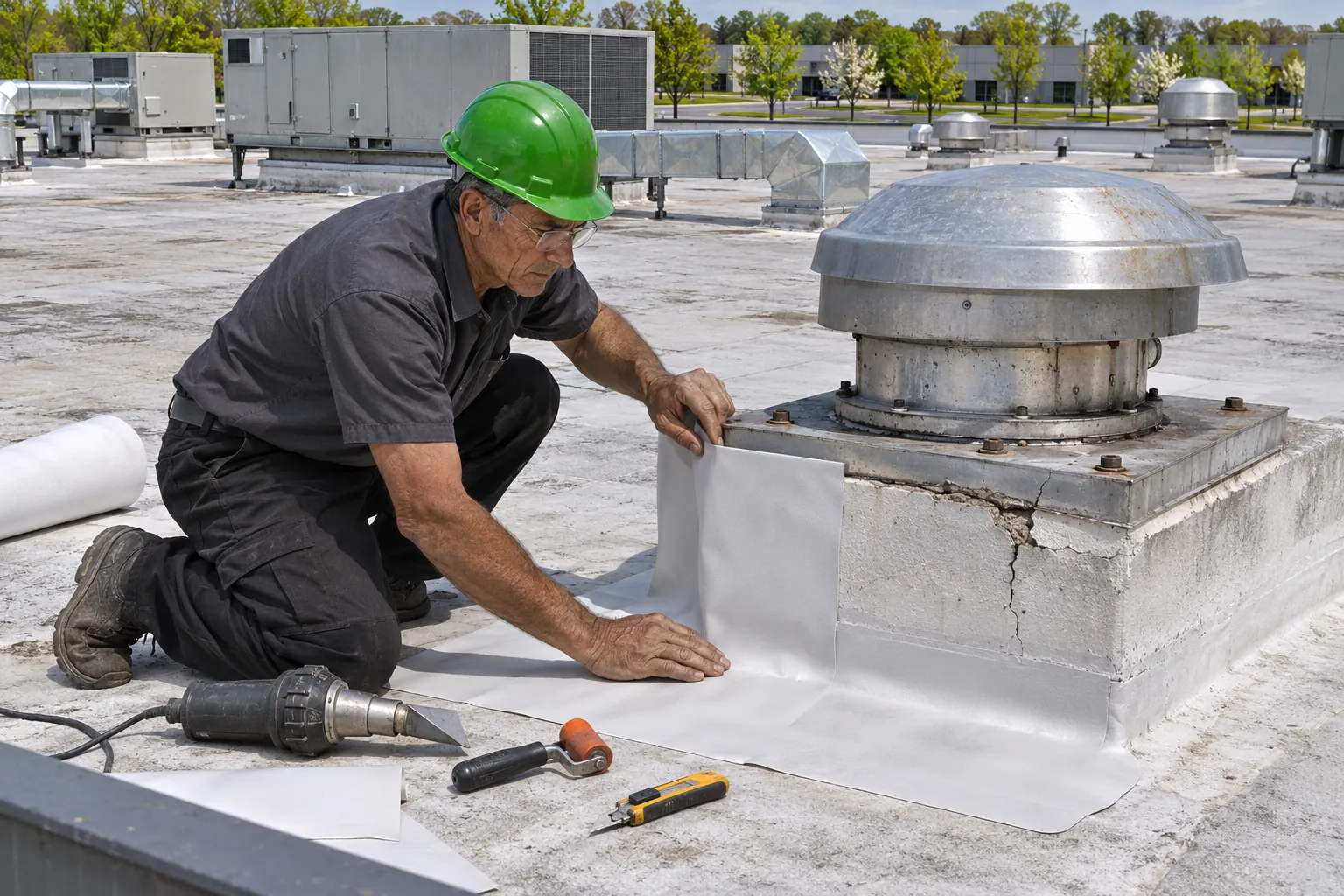 Curb And Fan Flashing
Fan curbs, grease damage, and walkways on plant roofs.
Ponding, patches, drains, and cost on low-slope roofs.
Ponding gets fixed at its cause. We clear or repair the drain or scupper, cut out insulation that has crushed or soaked, and add tapered board or a cricket where water pools against a wall or curb, so the roof sheds water within a day or two of rain.
A patch fits when one puncture, seam, or flashing detail failed and the rest of the membrane is dry and flexible. Brittle sheets, scattered leaks, or wide wet areas lean toward replacement. Either way, we keep crews and debris away from patient entrances.
It can mean a new drain bowl or clamping ring, fresh membrane flashing into the drain, resetting the drain at the true low point, or clearing the line underneath. Ice that formed in the bowl over winter often splits the flashing, so we look for that first.
Membrane type, the size of the damaged area, wet insulation underneath, the number of drains and penetrations involved, and roof access all move the price. A single seam weld and a section replacement sit far apart, so we price from an on-site inspection.
Many repairs go ahead in cold weather with the right materials. TPO welds work at low temperatures on a dry surface, while EPDM tapes and some sealants need warmer conditions, so we use temporary repairs to stop water until a milder day.
Send the address and where water shows inside, and we will inspect the membrane and the drains.