Call for Leak Repair When
- A ceiling stain grows after each rain
- Water drips in a spot with no roof opening above it
- A past patch stopped working
- Wet insulation shows up near a skylight or curb
- Floors or racking stay damp after storms

Carmel commercial roof leak repair starts inside, where we map every stain, then follows the water upslope to the seam, curb, or drain letting it in.
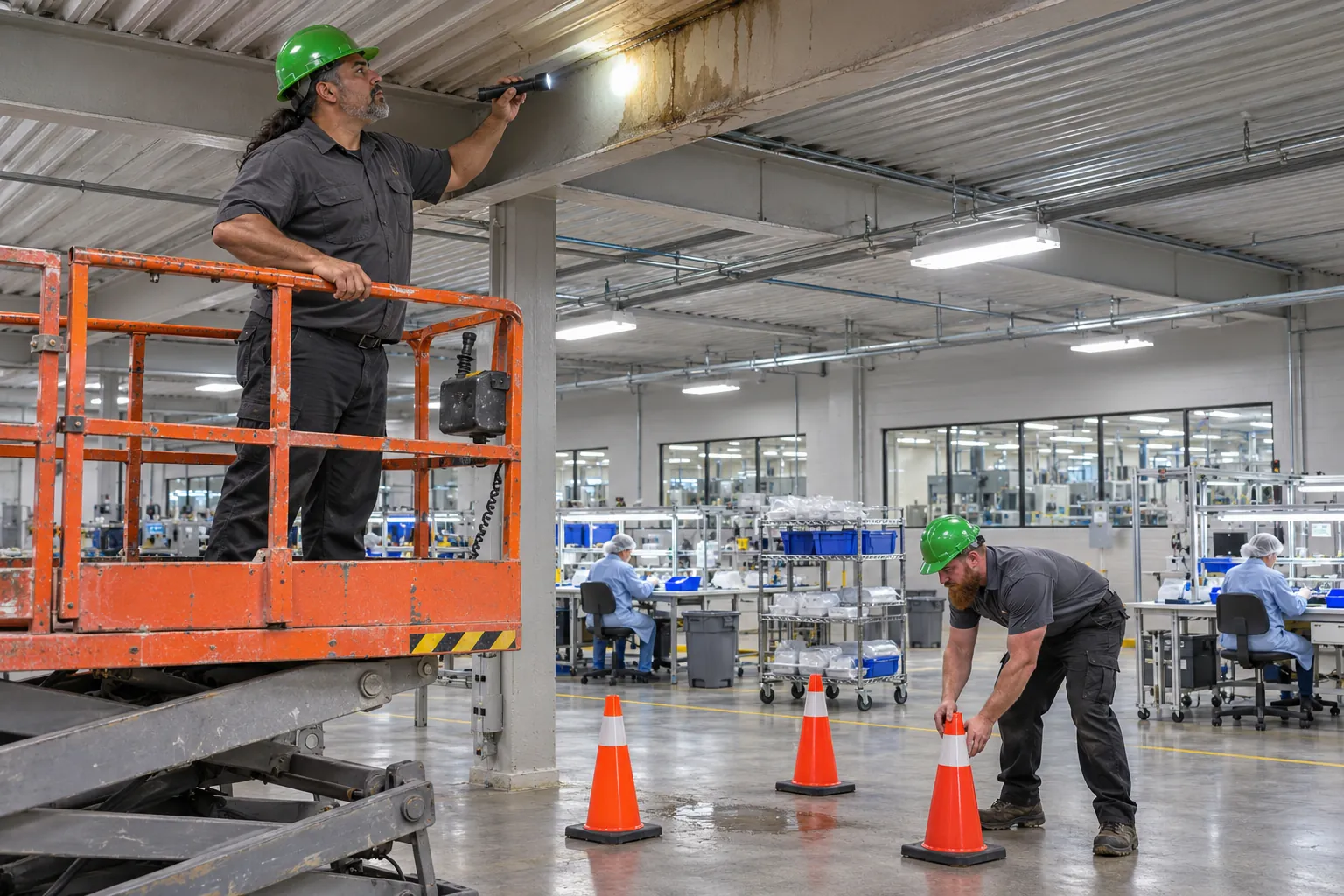
Carmel commercial roof leak repair is for buildings with water showing inside and no clear cause. Some drips turn out to be something else.
Water rarely drips straight down. These are the openings we trace back to most often.
Flashing at an HVAC curb pulls back at the corners as the unit cycles. Water then follows the duct chase and appears over a hallway or office.
Sealant around a skylight curb dries out and cracks. Drips land under the skylight but also along the nearest joist or purlin.
A blocked strainer lets water rise over a seam or a flashing edge it would normally clear. The leak stops when the ponding drains away.
Open coping joints and loose counterflashing let water into the wall behind the membrane. Stains often show up along an exterior wall inside.
Finding the true opening stops repeat calls, repeat patches, and repeat damage below.
Tracing follows the same path water does, in reverse.
Each stain and drip goes on a floor plan, then we walk the roof above and upslope of every mark. Seams, screws, skylights, curbs, and drains near those lines get checked closely.
On insulated roofs, meter readings and infrared images show where water has spread under the membrane before it reaches the ceiling.
Curb flashing, unit panels, ductwork, and condensate lines get checked together, and anything that belongs to your HVAC contractor gets flagged for them.
Tracing time, the roof system, how far water spread, and the details around the opening set the price, which we give after the source is found.
A leak that returns usually means the first patch missed the real opening. Send the address and the stain locations, and we will trace it.
Get A Free EstimateFour stages take a leak from the ceiling to a tested repair.
Our first walk covers the roof area directly above and upslope of every marked stain, since water travels along the deck before it drops. Wind direction during past leaks narrows the search.
Meters, probes, and when needed a controlled hose test isolate the entry point. Each suspect seam or curb gets tested on its own so the cause is clear.
The failed seam, curb, drain, or skylight gets repaired with matching material, and any soaked insulation nearby is cut out and replaced.
A follow-up water test over the repair confirms nothing reaches the ceiling. You get photos of the opening and the finished repair.
Once the opening is found, the repair itself falls under one of these services.
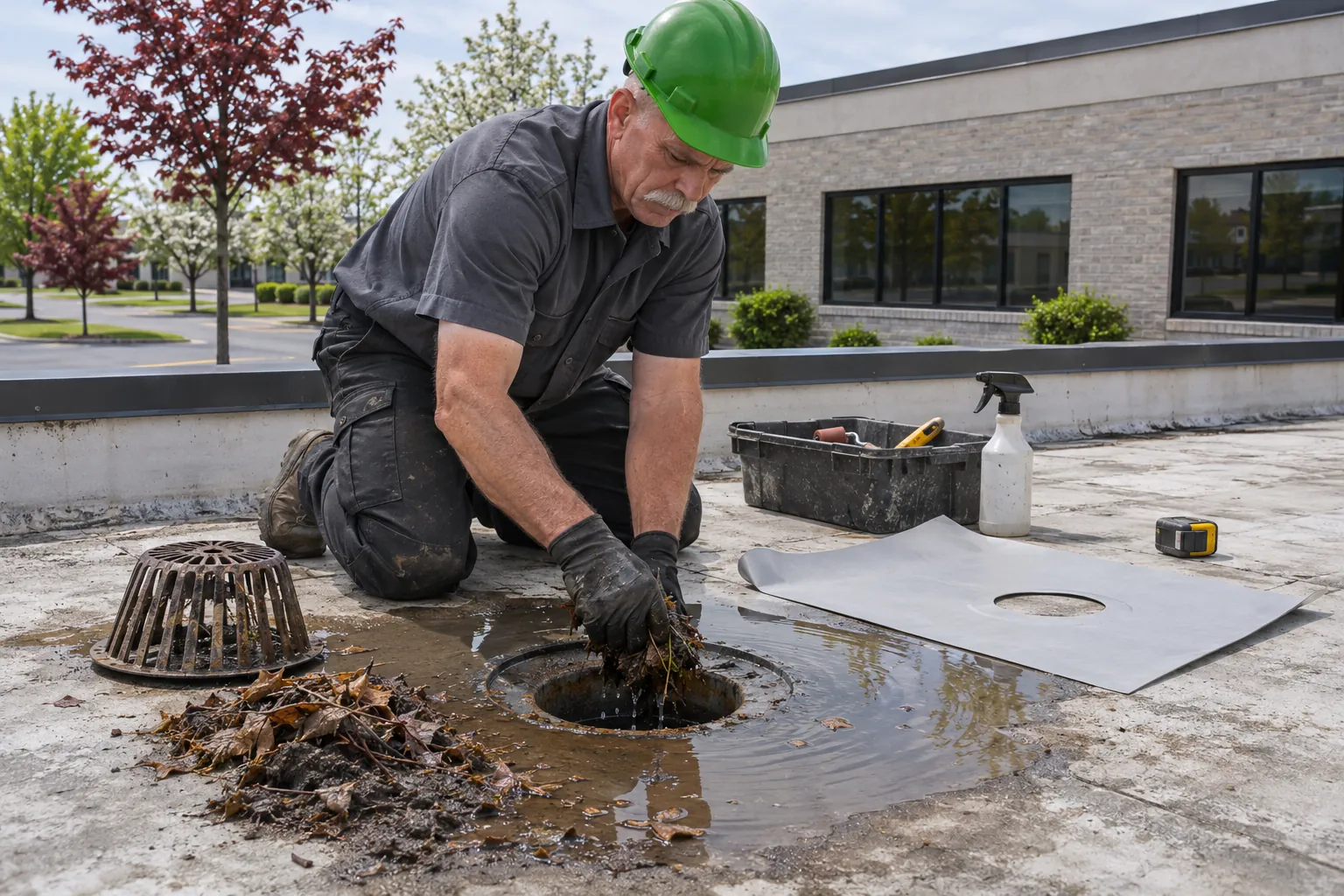 Welded And Taped Seams
Membrane seams, punctures, blisters, and ponding at drains.
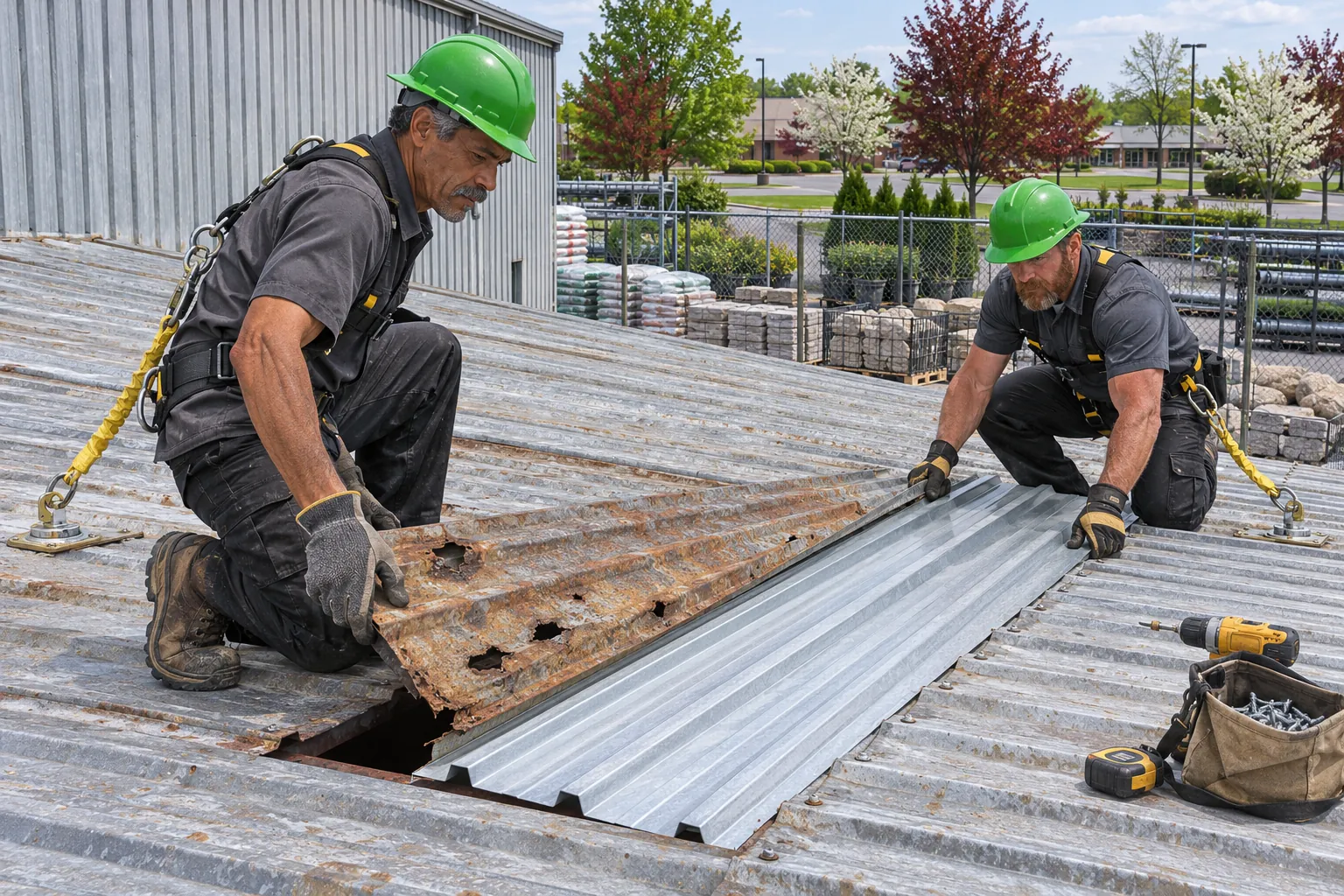 Through-Fastened Panels
Screws, laps, trim, and rusted panels on metal buildings.
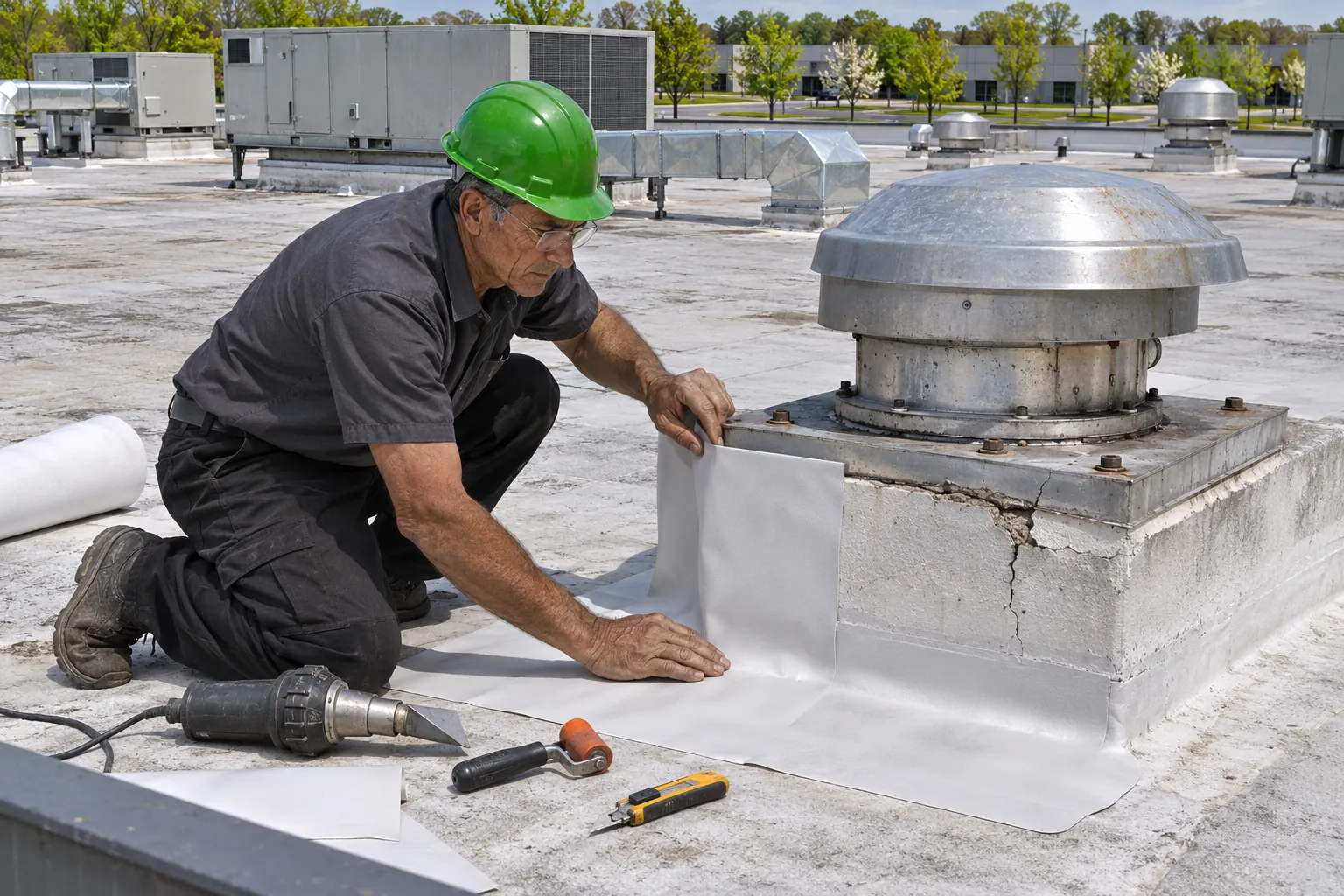 Curb And Fan Flashing
Fan curbs, grease damage, and walkways on plant roofs.
Tracing, rooftop units, cost, and who pays.
We map wet spots, stains, and drips inside first, then walk the roof above and upslope of each one. Seams, screws, skylights, curbs, and drains get close checks, and on insulated roofs meters or infrared scans show where water is spreading.
Most rooftop unit leaks start where curb flashing has pulled away or corners have opened. Unit panels, ductwork, and condensate lines can also let water in, so we reflash the curb and point out anything your HVAC contractor should handle.
Tracing time comes first, then the roof system, how far water spread into insulation, and the details around the opening. Roof height and access matter too. We give a price once the source has been found on the inspection.
Often, though it depends on the lease. Many leases put roof leaks on the landlord, while triple-net leases can shift them to tenants, and some split repair from replacement. Get legal advice on unclear terms; our photos document the source either way.
A temporary seal or cover can stop water over a bad seam or curb until weather or materials allow the permanent repair. We note every temporary fix in the scope so it gets replaced and never forgotten.
Mark where water shows inside, then call or send the form. We trace it to the opening and repair it.