Repair Fits When
- Membrane has softened only around fans or stacks
- Curb flashing shook loose from vibration
- Walkways to equipment have worn through
- Drains clog with process residue
- Damage is limited to equipment zones
Carmel industrial roof repair from us fixes membrane softened by discharge, flashing shaken loose at fans, and walkways worn by service traffic.
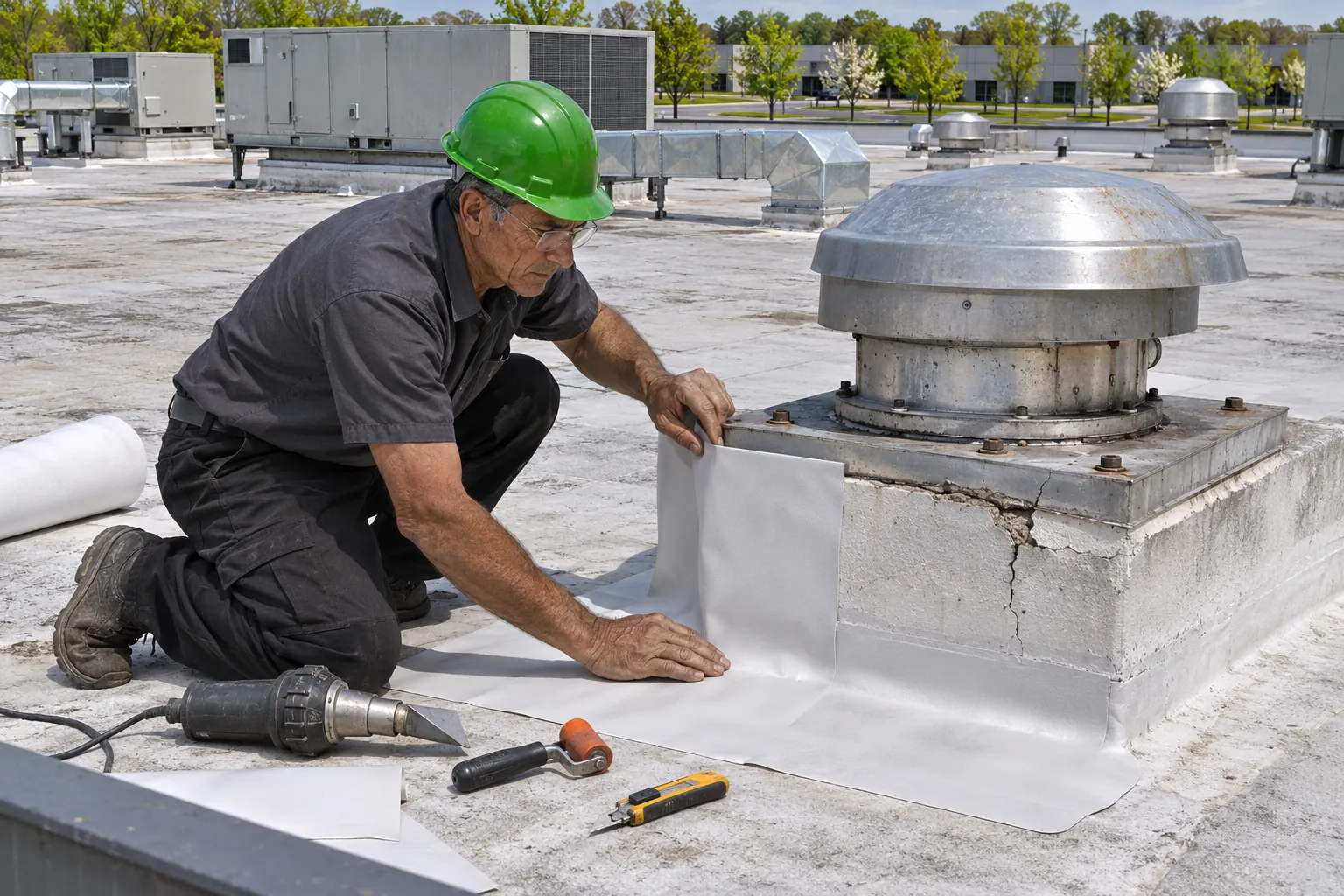
Carmel industrial roof repair suits roofs where process equipment, not age, is wearing the membrane down.
Plant roofs fail around the equipment first. These four conditions come up on most visits.
Oil and grease blown from kitchen or process fans soften many membranes. The sheet swells and splits in a ring around the fan curb.
Fans, compressors, and units shake their curbs all day. Fasteners back out and flashing tears at the corners.
Technicians walk the same line to each unit. Without pads, that path scuffs through the top surface and opens punctures.
Process dust and residue collect in strainers and slow the drains. Water backs up against curbs and seams during storms.
Small leaks at curbs and pipe supports soak the insulation around equipment. Soft, spongy areas near units point to the wet board.
Plant roofs protect lines, stock, and people. A repair near the equipment protects all of them.
Each method targets one way plant equipment wears the roof.
Damaged membrane comes out, the fan curb is reflashed with a compatible membrane, and protection pads or containment go around the fan.
Pads are welded or adhered along the paths technicians use, so foot traffic stays off the roof field.
The surface, seams, flashings, drains, edge metal, curbs, and equipment zones get checked, and suspect areas are tested for moisture.
Spring and fall visits clear drains, reseal new penetrations, and catch storm or discharge damage early.
Strainers and drain lines clogged with dust or residue are cleared, and strainers are reset so storms drain off the roof.
Discharge damage spreads with every shift the fan runs. Send the address and the fan locations, and we will plan a repair around production.
Get A Free EstimateFour stages, each one coordinated with plant operations.
Our inspection starts with a safety briefing from the plant contact, then covers every fan, curb, stack, and drain. Discharge sources get noted on the roof plan.
Roof repair days are set around shifts, shutdowns, and lockout needs. Material staging and lift locations get agreed with the facility team ahead of time.
Softened membrane is cut out, curbs are reflashed, and pads or containment go in. Drains get cleared of residue in the same visit.
Photos and notes for every roof zone go into a list grouped by urgency, ready for the next maintenance visit and budget planning.
Plant buildings often carry flat membrane sections, metal panels, and leaks that need tracing.
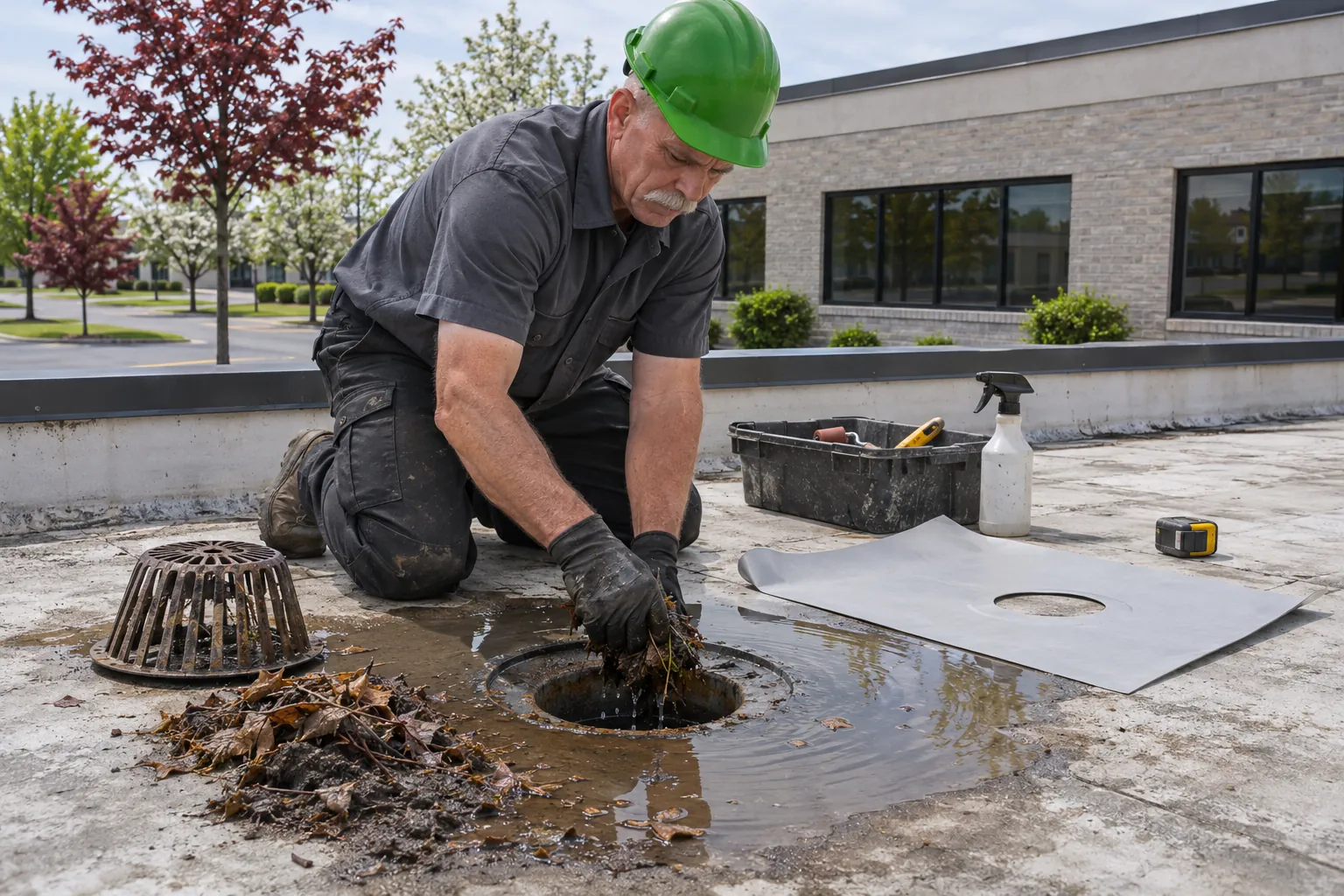 Welded And Taped Seams
Membrane seams, punctures, blisters, and ponding at drains.
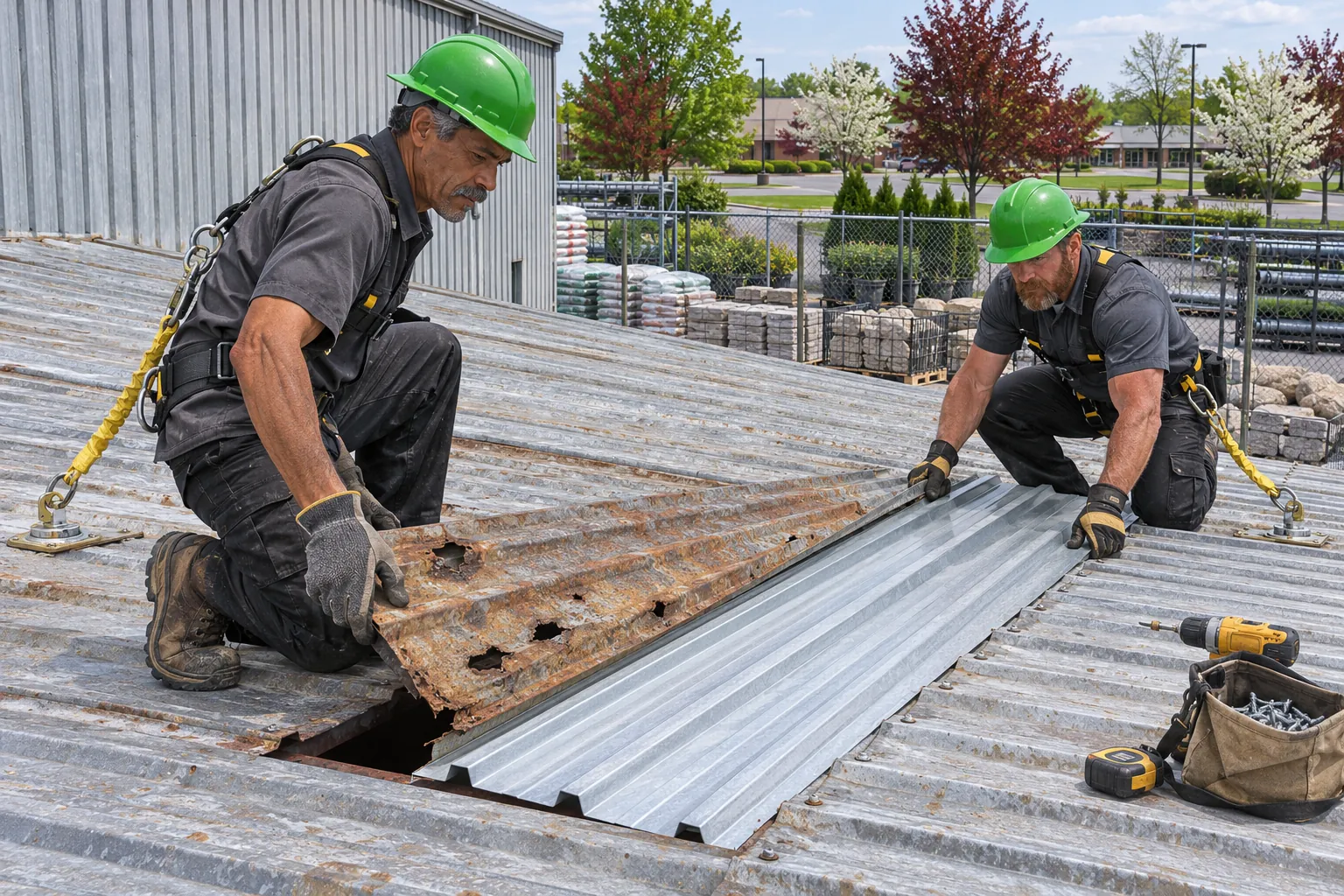 Through-Fastened Panels
Screws, laps, trim, and rusted panels on metal buildings.
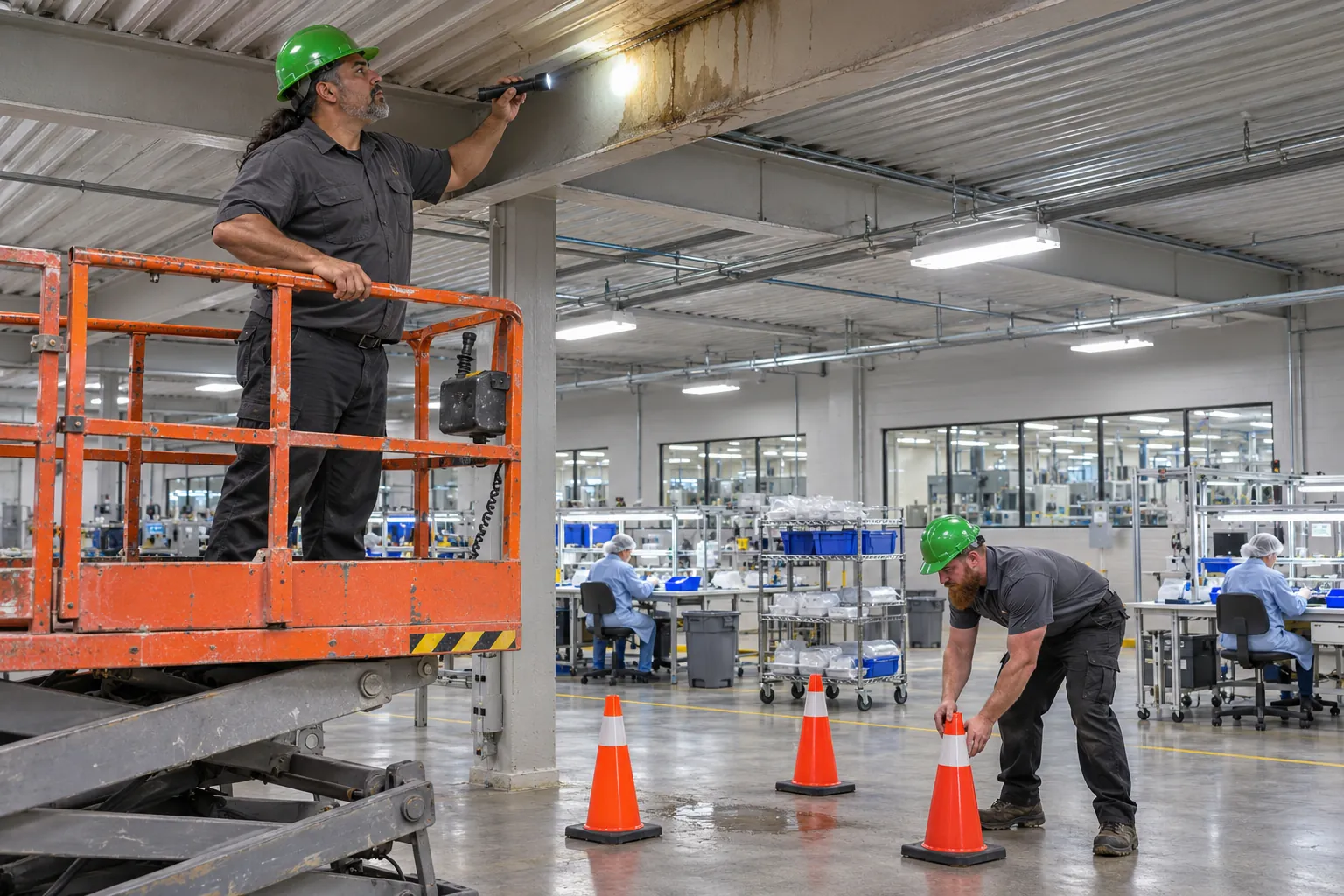 Traced To The Opening
Tracing active drips and stains back to the roof opening.
Fans, inspections, maintenance, and cost on plant roofs.
Grease, oil, or chemical discharge softens the membrane, and vibration loosens the flashing. We remove the damaged material, reflash the curb with a compatible membrane, and add pads or containment. Fixing the discharge itself keeps the repair from failing again.
Clearing drains, gutters, and debris; checking seams and flashings; resealing penetrations added since the last visit; and noting ponding, punctures, and chemical damage. Visits in spring and fall catch winter and storm damage while it is still small.
The roof surface, seams, flashings, drains, edge metal, curbs, and the zones around exhaust and HVAC equipment. We note ponding, punctures, and chemical exposure, test suspect areas for moisture, and hand over photos with a repair list grouped by urgency.
Roof size and height, the roof system, the damaged area, discharge exposure, safety rules around production, and lift access all affect it. Work set around shifts or shutdowns can change pricing too. An on-site inspection sets the number.
Most roof repairs happen above running lines without stopping them. Work near exhaust fans or process stacks sometimes needs a short lockout, which we plan with your safety contact before the repair day. Material lifts get scheduled when forklift traffic below is lightest.
Send the address and the equipment zones causing trouble, and we will plan a repair around production.